
You've got a match in an hour and no clue if your gym shorts and old running shoes will cut it. Figuring out what to wear playing pickleball matters more than most beginners expect, because the wrong fabric or footwear can leave you blistered, overheated, or slipping mid-rally. This isn't tennis or badminton. The quick lateral shuffles and sudden stops at the kitchen line demand gear built for this specific sport.
Here's the short answer: you need moisture-wicking fabric, court shoes with lateral support, and socks that actually grip inside your shoe rather than let your foot slide around. Beyond that baseline, there's real room to dress for comfort and personal style, whether that means a breathable polo, a skort with built-in shorts, or bold colors that match your paddle.
In this guide, we'll walk through every layer of a proper pickleball outfit, from top and bottom choices to footwear and the socks that tie it all together. We'll cover what works for casual rec games, league play, and tournament days, plus a few style tips so you look as sharp as you play.
Why your pickleball outfit matters
Pickleball looks casual from the sidelines, but the body mechanics involved are anything but relaxed. You're sprinting to the net, backpedaling for a lob, and lunging sideways to dig out a dink, sometimes all in the same rally. What to wear playing pickleball isn't a fashion afterthought, it's a functional decision that affects how long you last on court and how well you move once you're there. Wear the wrong fabric or the wrong shoe, and you'll feel it by the second game.
The demands of a fast, lateral sport
Unlike running or cycling, pickleball asks your body to stop and change direction constantly. Your gear needs to keep pace with that unpredictability. A cotton t-shirt that felt fine on a walk will turn heavy and cling to your skin within twenty minutes of live rallies, and loose basketball shorts can bunch up or restrict your split-step at the kitchen line. The sport's start-stop rhythm puts real stress on ankles, knees, and hips, which is exactly why footwear and clothing built for lateral movement matter so much more here than in a straight-line activity like jogging.
Dress for the stop-and-go nature of pickleball, not just for the fact that you're playing a sport.
Comfort keeps you focused on the game
Nothing kills a rally faster than stopping mid-point to adjust a waistband or wipe sweat out of your eyes. Fabric that traps heat forces your body to work harder to cool itself, and that fatigue shows up as slower reaction time at the net. Breathable materials pull moisture away from your skin so it evaporates instead of soaking into the fabric, and anti-chafe seams on shorts or skirts keep you from dealing with irritation after back-to-back games at a tournament. Comfort isn't a luxury add-on, it's what lets you actually concentrate on your shot selection instead of your discomfort.
Safety on the court is non-negotiable
Ankle rolls and knee tweaks are some of the most common pickleball injuries, and a big share of them trace back to footwear that wasn't built for the sport. Running shoes are designed for forward motion, so they offer little lateral stability when you plant hard to change direction. Court-specific shoes, by contrast, use a wider base and reinforced sides to keep your foot steady during quick cuts. The same logic applies to socks: a sock that slides inside your shoe creates friction, and friction becomes blisters or, worse, a foot that shifts at the exact moment you need to push off.
| Outfit Element | Wrong Choice | Right Choice |
|---|---|---|
| Top | Cotton tee | Moisture-wicking polyester or blend |
| Bottom | Loose basketball shorts | Athletic shorts or skort with stretch |
| Shoes | Running sneakers | Court shoes with lateral support |
| Socks | Thin cotton crew socks | Grip socks with cushioned zones |
Getting these four elements right sets the foundation for everything else in this guide. Each piece plays a specific role, whether that's keeping you dry, letting you pivot without slipping, or protecting your feet from blisters after three matches in a row. From here, we'll break down exactly how to choose each layer, starting with the top you put on before you even walk onto the court.
Step 1. Pick a moisture-wicking top
Start your outfit from the top down, because your shirt sets the tone for how comfortable the rest of your session feels. Moisture-wicking fabric pulls sweat away from your skin and pushes it to the surface where it evaporates, so you stay cooler and drier than you would in cotton. Look for polyester blends or performance fabrics with a tight knit structure, since they move sweat faster than loose weaves and dry out between points instead of soaking through by game two.
A shirt that manages sweat is worth more on court than one that just looks good in the mirror.
Why fabric choice beats fashion choice
Cotton feels soft off the shelf, but it absorbs moisture instead of releasing it, which means it gets heavier and colder against your skin as you sweat. That extra weight drags on your shoulders during overhead swings and slows your reaction time when you need to snap back into position. Synthetic performance fabrics solve this by wicking sweat to the outer surface, where airflow and sun exposure dry it out. If you're playing an early morning league match or a midday tournament in Southern California heat, this difference shows up fast, usually within the first ten minutes of live play.
Fit and style options that actually work
Once you've settled on fabric, think about cut. A relaxed athletic fit gives your shoulders room to swing without pulling, while a more fitted polo keeps fabric from flapping during quick lateral movement. Sleeveless tanks work well in hot climates since they cut down on fabric bunching under your arms, but they offer less sun protection if you're playing outdoor courts for hours.
Here's a quick rundown of top styles and when each one makes sense:
- Performance polo: best for club play or tournaments where you want a slightly dressed-up look with full wicking benefits.
- Crew neck tee: casual rec games, easy to layer under a light jacket on cooler mornings.
- Sleeveless tank: hot weather, high-intensity singles matches, maximum airflow.
- Long-sleeve UV shirt: extended outdoor sessions where sun exposure is a bigger concern than heat buildup.
Whatever style you land on, check the fabric tag before you check the price tag. A breathable, quick-dry top does more for your game than any logo or color combination ever will.
Step 2. Choose bottoms built for lateral movement
Below the waist, your bottoms need to move with you through every lunge, split-step, and sideways shuffle. What to wear playing pickleball on your lower half comes down to two things: stretch and range of motion. Cotton sweatpants or loose gym shorts might feel comfortable standing still, but they bunch up the second you drop into a defensive stance, and that extra fabric can throw off your balance right when you need to plant and push off.

Shorts, skorts, and skirts: what to look for
Decide on style first, then check the construction details that actually matter on court. Four-way stretch fabric lets the material move in every direction instead of resisting your hips and thighs, and a shorter inseam, usually seven inches or under for men and five to seven for women, keeps fabric from catching on your legs mid-sprint.
- Athletic shorts: streamlined, minimal fabric, good for players who want zero restriction
- Skorts: shorts built into a skirt, popular for a feminine look without sacrificing coverage
- Compression shorts under a skirt: extra security for players who dive for low balls
- Two-in-one skirts: built-in liner shorts plus a looser outer layer for breathability
Length and fit for lateral movement
Fit matters as much as fabric once you're actually moving. Too tight, and the waistband digs in every time you bend for a dink; too loose, and you're constantly hiking up your shorts between points instead of resetting your paddle position.
The best pickleball bottoms disappear on court, you shouldn't notice them until you're back on the sideline.
Aim for a fit that stays snug through the waist but loose enough through the thigh to let your legs open into a wide lunge without pulling at the seams.
Built-in liners and pockets
Liners and storage solve two separate problems, and both matter more than they seem on paper. A built-in liner eliminates the need for extra layers underneath, which cuts down on heat and chafing during long tournament days, while smart pocket placement keeps a spare ball or two within reach without slowing you down between serves. Look for side pockets deep enough to hold a ball securely through a full sprint, not just a shallow slit that drops your backup ball the moment you dive for a return.
Step 3. Find the right court shoes and socks
Footwear is the one piece of gear you can't fake your way through. Court shoes are built with a flatter, wider sole than running shoes, giving you the lateral stability you need when you plant hard and change direction at the kitchen line. Running shoes are designed to push you forward, not sideways, so wearing them on a pickleball court is one of the fastest ways to roll an ankle or slide on a hard cut.

Why court-specific shoes beat running shoes
Look for a herringbone or multidirectional tread pattern on the outsole, since it grips the court surface in every direction instead of just front to back. Reinforced side panels add structure around your foot during quick pivots, and a lower-to-the-ground build keeps your center of gravity stable when you lunge for a low dink.
| Feature | Running Shoe | Pickleball/Court Shoe |
|---|---|---|
| Sole shape | Curved, built for forward motion | Flat, built for lateral stability |
| Tread | Straight-line grip | Multidirectional grip |
| Side support | Minimal | Reinforced panels |
| Cushioning | Heavy heel cushion | Balanced cushion, low-to-ground |
Socks that grip instead of slide
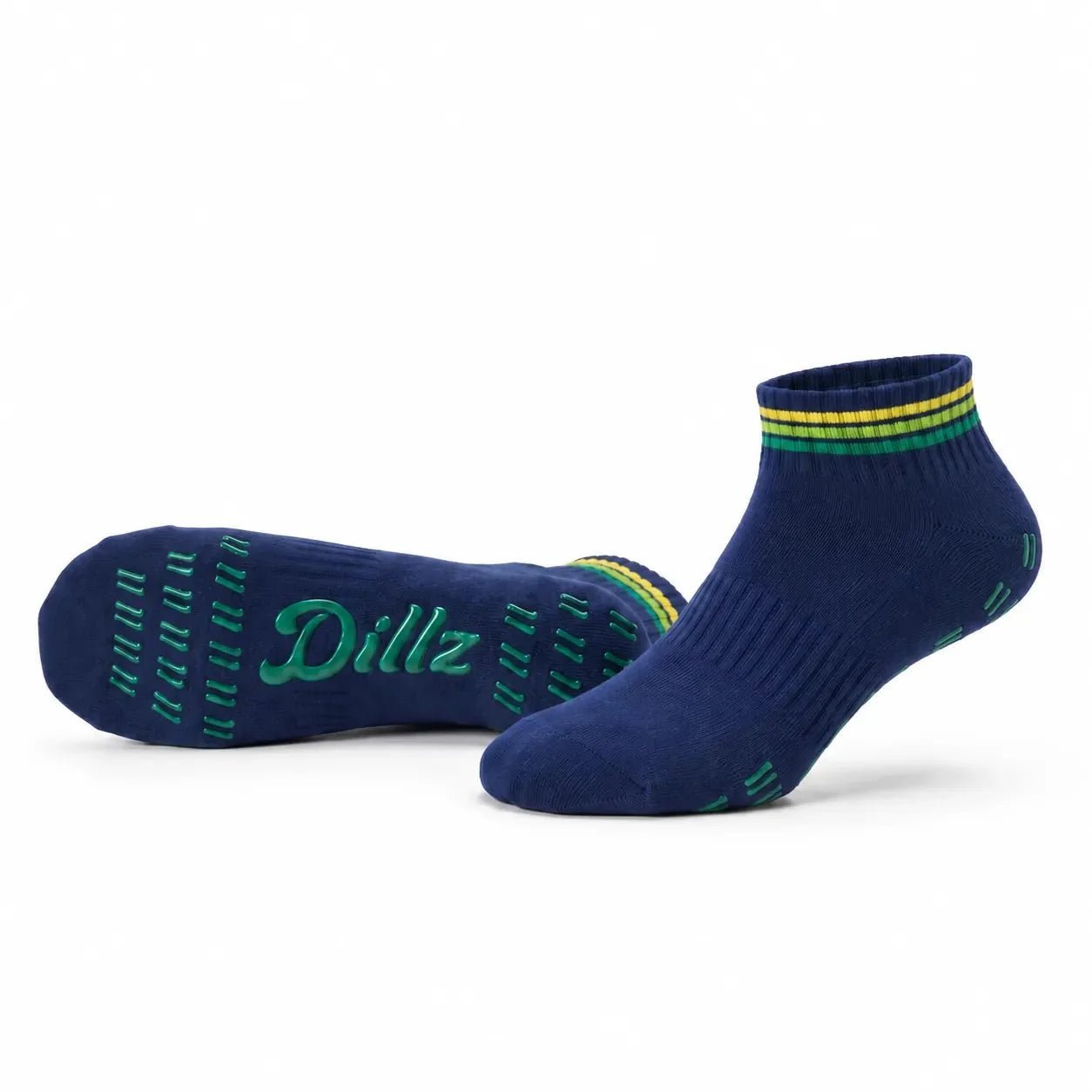
Once your shoes are sorted, don't skip the socks. A sock that shifts inside your shoe creates friction with every step, and friction turns into blisters by your second match of the day. Grip socks with rubberized zones on the sole keep your foot locked in place, which matters just as much as the shoe itself when you're cutting hard at the net.
Your shoes only work as well as the socks holding your foot steady inside them.
Matching your socks to your play style
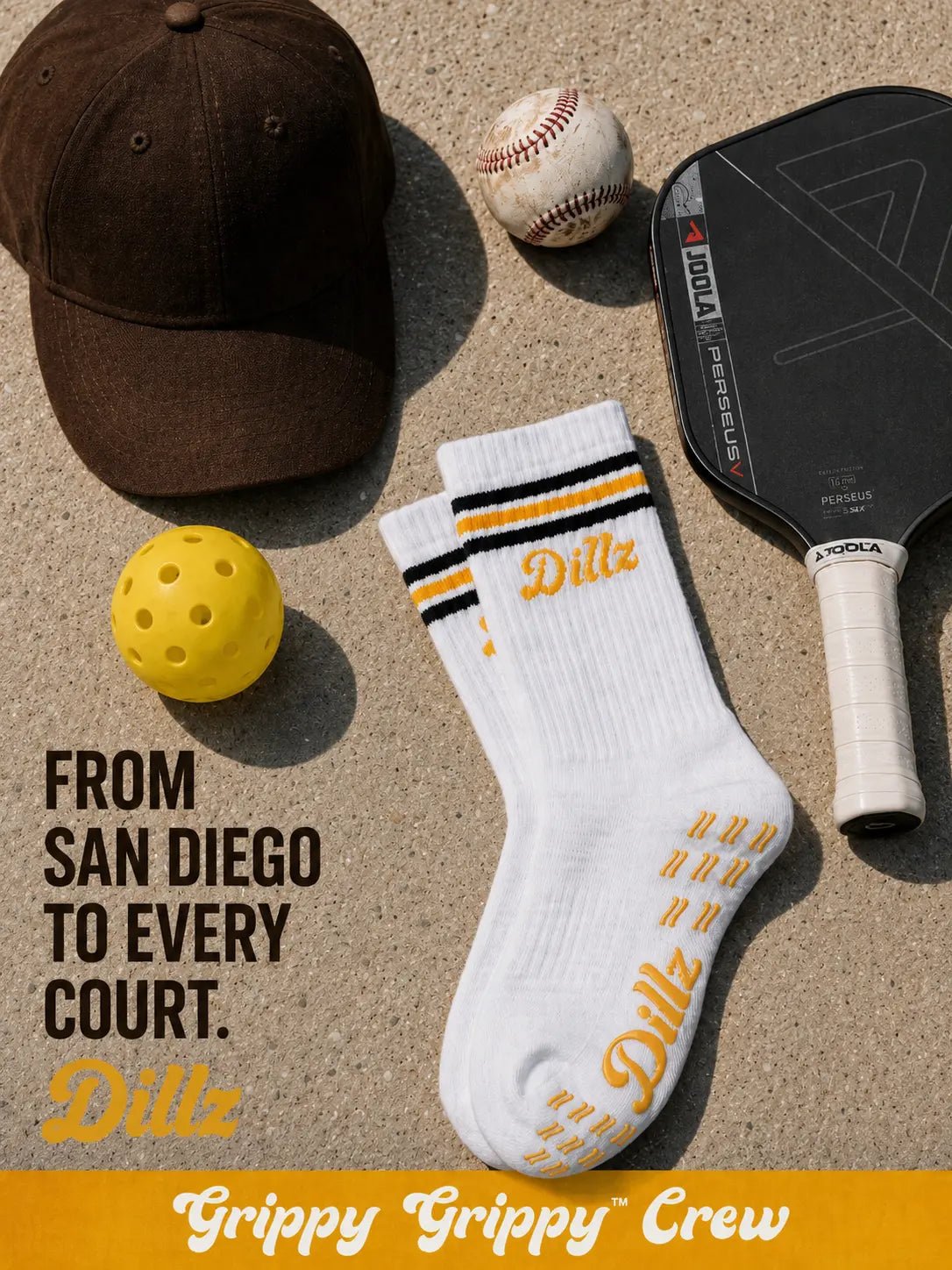
Dillz's Grippy Grippy™ grip sock collection covers both crew and ankle styles, so you can pick the cut that matches your shoe height and how much ankle coverage you want during long rallies. Consider these factors when choosing:
- Crew socks: more coverage, good for players who want extra cushioning around the ankle bone
- Ankle socks: lower profile, better for hot weather or low-top court shoes
- Cushioned zones: look for extra padding at the heel and forefoot for tournament-length sessions
- Color coordination: match your socks to your top or paddle for a pulled-together look on court
Step 4. Layer and accessorize for the conditions
Conditions change fast on a pickleball court, especially if you're playing outdoors in Southern California where mornings start cool and afternoons turn hot. Layering lets you adjust without packing a whole second outfit, and the right accessories handle the details your clothes can't, like sweat in your eyes or a sunburned neck by the third game.
Dressing for cool mornings and hot afternoons
Early league matches often start chilly, so a lightweight zip jacket over your moisture-wicking top gives you warmth you can shed the second you break a sweat. Look for jackets with underarm vents or mesh panels, since a jacket that traps heat defeats the purpose within the first game. As temperatures climb, swap that jacket for a breathable sun sleeve on your hitting arm instead of stripping down completely, which keeps sun exposure in check during long tournament days without adding bulk.
Layer for the coldest point of your session, not the hottest, and peel off as you warm up.
Sun protection and headwear
A wide-brim hat or visor blocks glare during overhead smashes and keeps sweat from dripping into your eyes mid-rally. Pair it with wraparound sunglasses if you're playing on a court with a lot of sky glare, and don't skip sunscreen on your ears and the back of your neck, spots most players forget until they're peeling a week later.
Small accessories that make a difference
The smaller items in your bag matter more than they look like they should once you're three games into a tournament. Here's a quick checklist worth packing:
- Wristbands: wipe sweat mid-point without breaking your grip on the paddle
- Absorbent cotton court towel: keeps your hands and paddle face dry between serves, which matters more than most players realize on humid days
- Paddle-cleaning tool: grit and dust build up on your paddle face fast, and a clean surface keeps your spin consistent
- Extra grip sock pair: swap in fresh socks between matches if you're playing multiple rounds in one day
None of these accessories replace a solid top, bottom, and shoe setup, but they fill in the gaps that separate a comfortable match from a distracted one.
Building your go-to pickleball look
Getting what to wear playing pickleball right isn't about chasing trends, it's about building a repeatable system: a wicking top, stretchy bottoms, court shoes, grip socks, and a couple of accessories that handle whatever the weather throws at you. Once you've dialed in each layer, getting dressed for a match stops being a guessing game and starts being routine, the same way you'd pack your paddle bag without thinking twice.
Start with the piece that's easiest to fix first. If your socks slide or your feet blister by game two, that's the cheapest, fastest upgrade you can make before your next league night. Grip matters more than people expect until they feel the difference underfoot.
Ready to build your look from the ground up? Check out the grip sock collection at Dillz and give your feet the traction the rest of your outfit deserves.