
Grip socks are athletic socks with a dedicated traction surface on the sole. Inside a well-fitting court shoe, that surface adds friction between the sock and the shoe to help reduce unwanted foot movement. The shoe outsole—not the sock—controls traction against the court.
For pickleball and tennis players, that distinction matters during starts, stops, split steps, and changes of direction. Grip socks can support a more secure in-shoe feel, but they cannot correct shoes that are too large, too tight, or otherwise poorly fitted.
How do grip socks work inside court shoes?
Regular athletic socks can shift against a shoe's insole or interior. A grip sock adds a traction pattern at that contact point, helping the sock stay aligned with the foot during court movement.
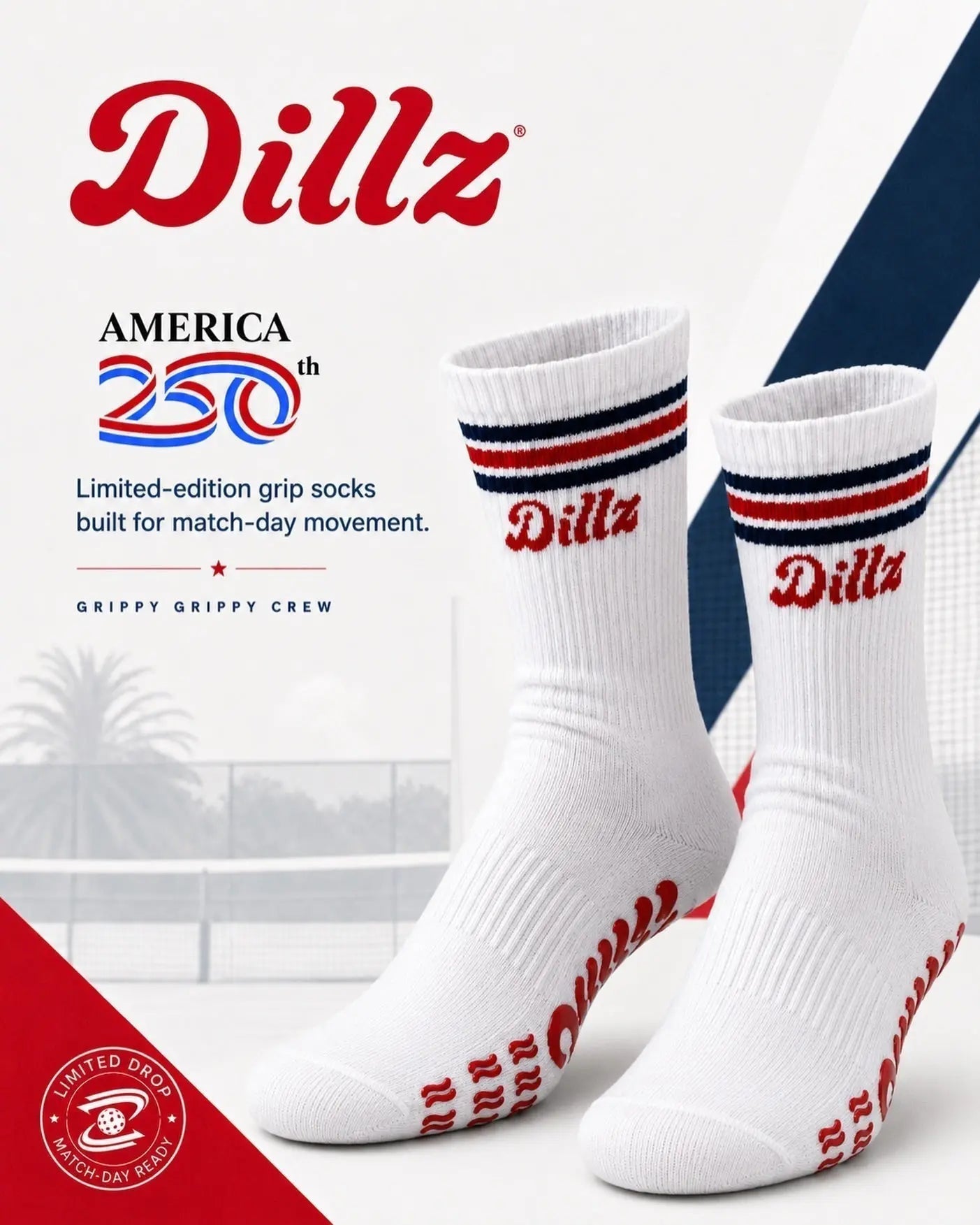
Grippy Grippy™ uses DillzGrip, a full-sole grip system designed to help reduce unwanted sliding inside court shoes. For a pickleball-specific breakdown, read the Dillz guide to choosing pickleball grip socks.
Inside-shoe grip and court traction are different
Inside the shoe: the grip surface works between the sock and the shoe, where unwanted foot movement can happen.
On the court: the shoe outsole interacts with the playing surface. Court material, outsole condition, and shoe design affect shoe-to-court traction.
A grip sock is an additional in-shoe layer. It does not replace a properly fitted court shoe or change how the outsole performs on the court.
Grip socks versus regular athletic socks
| Compare | Grip socks | Regular athletic socks |
|---|---|---|
| Sole surface | Dedicated traction pattern | No dedicated grip layer in most styles |
| Primary role | Adds friction between the sock and shoe | General athletic use; features vary by product |
| Fit priority | Close fit that keeps the grip aligned | Fit and construction vary by style |
| Shoe requirement | Still requires a well-fitting court shoe | Still requires a well-fitting court shoe |
What should you look for in grip socks?
- Grip coverage. Check where the traction surface sits and whether it stays under the main foot-to-shoe contact area.
- A close fit. The sock should stay aligned without bunching, twisting, or crowding the toes.
- Breathability. A breathable court sock can support comfort during warmups, drills, league play, and longer sessions.
- The right cut. Choose Crew or Ankle based on your preferred coverage and how the sock fits with your court shoes.
- Clear product information. Look for visible details about grip coverage, sizing, intended use, and available options instead of relying on broad performance claims.
When can grip socks be useful for court sports?
Grip socks are worth considering when your court shoes fit correctly but your socks still shift against the shoe interior. They can also be useful for players who want a court-specific sock that stays aligned during quick movement.
For pickleball, that includes split steps, kitchen movement, quick stops, resets, and direction changes. Tennis players may want the same type of in-shoe traction during starts, stops, and lateral movement.
If the shoe itself slips against the court, inspect the outsole and choose footwear appropriate for the playing surface. That is a shoe-to-court issue rather than a sock-to-shoe issue.
How should grip socks fit?
A grip sock should fit close to the foot without loose fabric, pressure, bunching, or twisting. The heel should sit in place, and the sole grip should remain aligned under the foot. Your court shoe should still fasten comfortably while wearing the sock.
Use the current size selector on each product page, or start with the Pickleball Grip Sock Finder to compare cut, coverage, color, and playing routine.
Should you choose Crew or Ankle grip socks?
Choose Crew if you prefer classic court-sock coverage through the ankle and lower leg. Choose Ankle if you want a lower-profile cut. The better choice is the one that fits correctly and works comfortably with your court shoes.
See the full Crew versus Ankle grip-sock comparison for a quick side-by-side guide.
Can the same grip socks be worn indoors and outdoors?
Yes. The same grip socks can be worn inside well-fitting court shoes for indoor or outdoor pickleball and tennis. The grip surface works inside the shoe; the court surface and shoe outsole affect shoe-to-court traction.
Do grip socks replace properly fitted court shoes?
No. Grip socks can add traction inside the shoe, but they cannot correct footwear that is the wrong size or shape. Start with secure heel and midfoot hold, comfortable toe space, and shoes suited to your court surface.
Choose grip socks for your court routine
Grippy Grippy™ Crew and Ankle socks combine DillzGrip full-sole traction, DillzAir breathable fabric, and ArchHug targeted arch support for pickleball-first court movement. Shop Dillz pickleball grip socks to compare current cuts, colors, sizes, and 3-Pack options.